Freedom and Fear: Holding Both on the Fourth of July
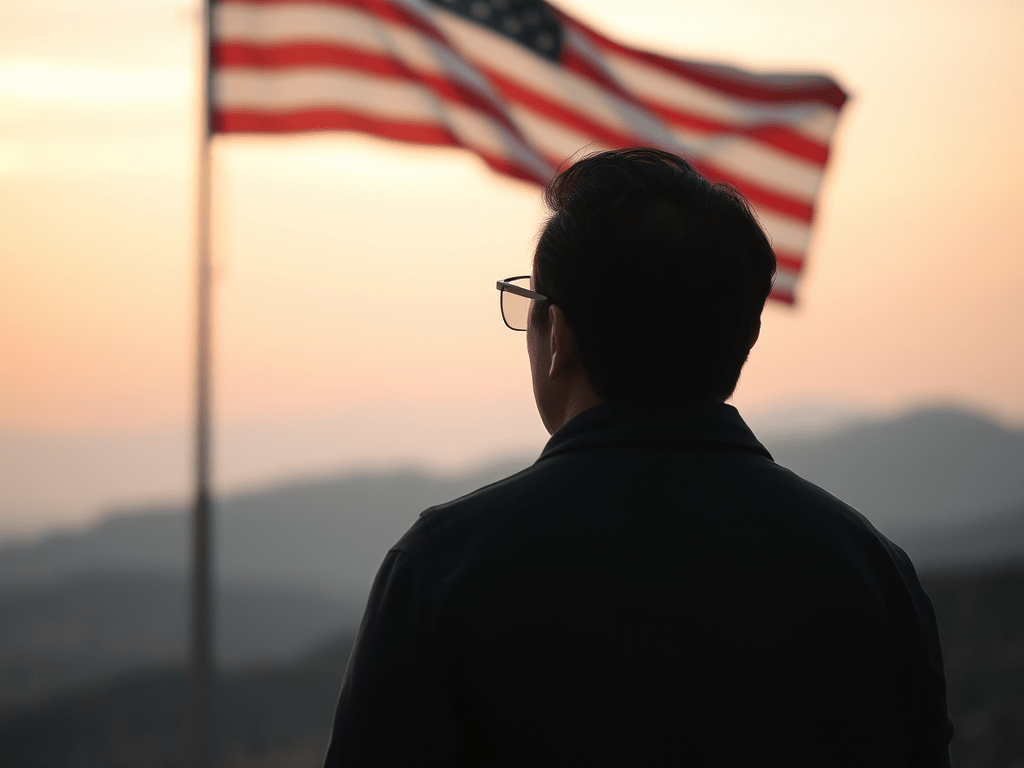
This year, the Fourth of July feels complicated for a lot of people.
Some of us are lighting sparklers, flipping burgers, celebrating the idea of freedom with friends and family.
Some of us are watching the news, scrolling headlines, and wondering: Is this still the country I thought it was?
And many are doing both at once.
It’s strange to live in a country where we’re told we’re free—while so many feel afraid. Afraid of political division. Afraid of losing rights. Afraid of what it means to belong here, to disagree here, to hope here. That’s not unpatriotic, it’s awareness. And holding these tensions—freedom and fear, pride and grief—is not only possible. It’s human.
The Psychology of American Freedom
The United States was built on a radical idea: that people should govern themselves. That liberty is a birthright. That each person’s dignity matters.
But that idea has always coexisted with contradiction. Freedom for some was built on the backs of others. And while the Constitution promises “life, liberty, and the pursuit of happiness,” those promises have often been unevenly distributed from the start.
That contradiction isn’t just political. It’s psychological.
It teaches us to both idealize and distrust power.
To love the dream, but question the reality.
To crave individual freedom, while longing for community and security.
To say “We the people,” and then wonder who “we” really includes.
This internal tug-of-war affects all of us—especially when we try to make sense of a society that feels increasingly fractured.
The Toll of Collective Uncertainty
The last few years have stirred up a deep, collective unease. For many of us, the foundational sense that we’re safe—or even seen—has been shaken.
We feel it when rights that felt secure are called into question, when voices are dismissed as “too emotional” or “too radical,” and when we scroll through rage, fear, and division daily; then try to go to work like everything’s fine…
It’s normal to feel overwhelmed, cynical, or even hopeless. But it’s also okay to admit: you care! You want to believe in something better. And that desire means something.
So Where Does That Leave Us?
It leaves us in a moment that requires clarity, compassion, and courage. Not blind optimism or relentless outrage, but something more grounded.
Here’s something we can do:
- Acknowledge fear without letting it rule us
- Engage critically without collapsing into despair
- Stay connected to the parts of America’s story that are worth fighting for—liberty, dignity, justice—even when the road is uneven
In therapy, we call this “holding dialectics:” accepting that two things which feel opposite can both be true.
You can love your country and be deeply concerned about it.
You can want to celebrate and want to cry.
You can feel proud and afraid—and still act with integrity.
A Humanist Path Forward
At Sandstone Therapy, we believe that mental health doesn’t exist in a vacuum. Our identities, our histories, and the systems we live in all shape the way we think, feel, and relate to one another.
That’s why we root our work in humanism: the belief that every person has inherent worth, dignity, and the capacity for growth.
No matter your politics.
No matter your past.
No matter how you’re feeling on this 4th of July.
Humanism means we hold space for your full experience. It means we don’t pathologize your fear—or your hope. And it means we’re committed to building a kind of freedom that isn’t just a slogan, but a lived experience: freedom to feel, to think, to be.
A Message of Hope
So if you’re conflicted today—if you’re sitting somewhere between celebration and concern—this is your reminder:
You’re not alone.
You’re not overreacting.
You’re not powerless.
We may not control the headlines, but we can control how we show up: with compassion and curiosity, with a commitment to something bigger than ourselves. Not perfection, just presence. Just connection. Just care.
And if that’s what we build our future on, then maybe there’s still something to celebrate after all.
Author: Bodie Coates, LMFT-S, LCADC-S, NCC
 Sandstone Therapy